• Link to Facebook
  • Link to X
  • Link to Youtube
  • Link to Rss this site
  • Link to Mail
  • Home
  • Reserved Area
  • Send contribution
  • Partners
  • People
  • Contacts
POnTE Project
  • About
    • Overview
    • Topics
    • Objectives
    • Work Packages
    • Consortium bodies
    • The Advisory Board
    • The Board of Stakeholders
  • Research
    • Project Reports
    • Project Deliverables
    • Project Publications
    • Featured Bibliography
  • Events
    • Meetings
    • Conferences
    • Technical workshops
  • Communication
    • News
    • Press review
    • Newsletter
    • Photo gallery
    • YouTube Channel
  • Factsheets
    • Xylella and Hemipteran vectors
    • CaLsol and Psyllid vectors
    • Hymenoscyphus fraxineus and Phythophtora
    • Project Outcomes
  • Protocols
    • Xylella and Hemipteran vectors
    • CaLsol and Psyllid vectors
    • Hymenoscyphus fraxineus and Phythophtora
  • Symptom Database
    • Xylella and Hemipteran vectors
    • CaLsol and Psyllid vectors
    • Hymenoscyphus fraxineus and Phythophtora
  • Bibliography
    • Xylella and Hemipteran vectors
    • CaLSol and Psyllid vectors
    • Hymenoscyphus fraxineus and Phytophthora
  • Legislation
    • Xylella and Hemipteran vectors
    • CaLsol and Psyllid vectors
    • Hymenoscyphus fraxineus and Phythophtora
  • Links
  • Click to open the search input field Click to open the search input field Search
  • Menu Menu
You are here: Home1 / CONFERENCES2 / “Xylella fastidiosa: a threat to the olive tree”, a conference...

“Xylella fastidiosa: a threat to the olive tree”, a conference in La Jana (Spain), land of monumental olives

05/07/2016/in CONFERENCES

On Wednesday 13 July, the growers association ‘La Unió de Llauradors I Ramaders’ from Comunitat Valenciana region in Spain will organize the conference ‘Xylella fastidiosa: a threat to the olive tree’.
Prof. Maria M. Lopez from IVIA, a member of the POnTE consortium, will give a talk about the Xylella disease in olive, introducing also experiences from other woody crops such as citrus, grapevine and almond, of great economic importance in the Mediterranean Basin. Dr. Antonio Vicent, also from IVIA, will analyze the risks of introduction of X. fastidiosa in Spain, following the scientific opinion adopted by EFSA. Dr. Ester Marco will summarize the main research and extension activities about X. fastidiosa conducted at IVIA, with special emphasis on the POnTE project. Vicente Dalmau, Head of the Plant Health Service at Comunitat Valenciana will describe the official contingency plan for X. fastidiosa in this region.
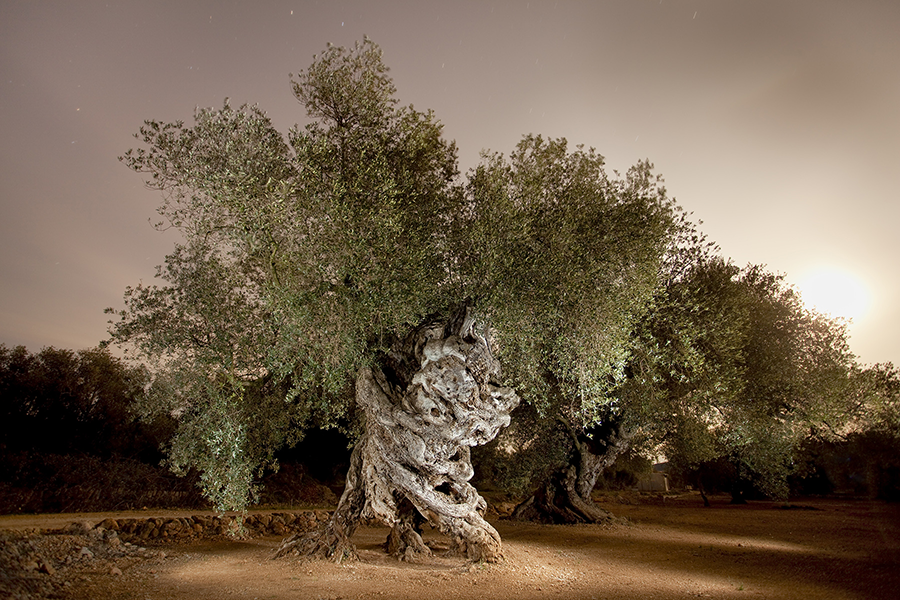
The conference will be held at La Jana, in the Taula del Senia territory in Castelló province. This particular geographic area received a special mention of the European Landscape Convention (2014-2015) of the Council of Europe for its millennium olive tree landscape. About 4,800 ancient olive trees are preserved in this territory, with the ‘olivo de las cuatro patas’ being awarded as the best monumental olive tree in Spain in 2016. Several locations at Taula del Senia served as filming locations of ‘El Olivo’, an emotional film by Iciar Bollain.
The conference program is available at this link.
Olivo-cuatro-patas

The “olive of four legs” (“olivo de las cuatro patas”) in the Taula del Senia territory, Spain
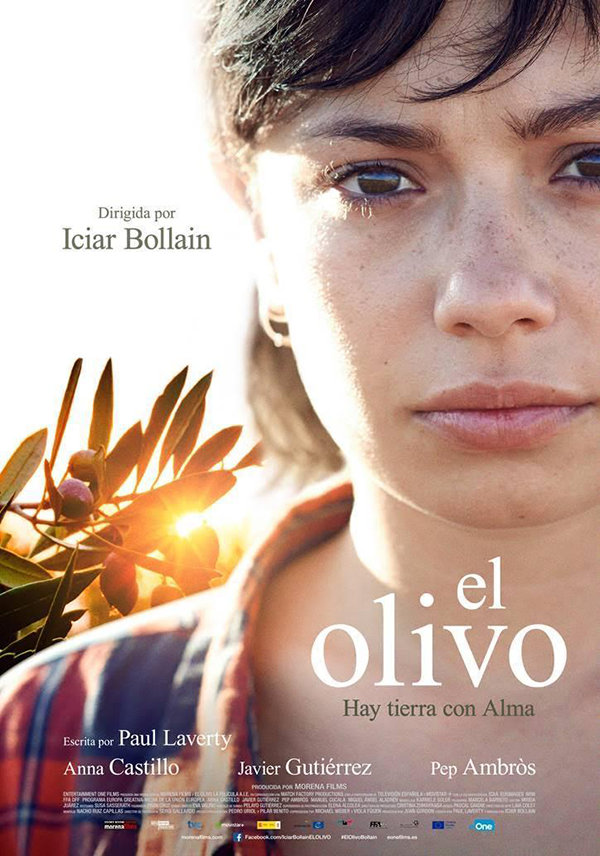
Poster of the movie "El Olivo" by Iciair Bollain

Poster of the movie “El Olivo” by Iciar Bollain

Tags: IVIA, Millenium olive tree, Xylella
Share this entry
  • Share on Facebook
  • Share on X
  • Share on WhatsApp
  • Share on Pinterest
  • Share on LinkedIn
  • Share on Tumblr
  • Share on Vk
  • Share on Reddit
  • Share by Mail
https://www.ponteproject.eu/wp-content/uploads/2016/07/Olivo-cuatro-patas.png 600 900 Staff https://www.ponteproject.eu/wp-content/uploads/2016/10/PONTE-LOGO-JPEG-2.jpg Staff2016-07-05 12:42:212016-07-05 14:00:17“Xylella fastidiosa: a threat to the olive tree”, a conference in La Jana (Spain), land of monumental olives
You might also like
ACLI RACALE announces the congress “Resilienza: Xylella research talks to people”, to be held in Salento, in September 2019
Understanding space-time dynamics of plant disease epidemics: Verticillium wilt and Xylella fastidiosa as case studies: a seminar by Dr. Juan Antonio Navas-Cortés (CSIC-IAS) in Bari
POnTE research on hemipteran vectors presented at HPIS 2017 organised by CSIC in Madrid
EFSA EFSA: Xylella fastidiosa is responsible for the olive disease in Italy
OLIVE OIL TIMES | Research shows Leccino less susceptible to Xf
Candidatus Liberibacter solanacearum modelling goes to the field
Popular
  • Two upcoming courses promote innovative diagnostics for...05/09/2016 - 10:51
  • NEWSLETTER | ISSUE 23 | November 9, 201609/11/2016 - 15:00
  • Rome
    Rome kick-off meeting launched Consortium activities29/12/2015 - 11:25
  • EC.EUROPA.EU|Start of a new EU-funded project on solutions...29/12/2015 - 16:40
Recent
  • Estimating the epidemiology of emerging Xylella fastidiosa...02/07/2020 - 10:58
  • Assessment of the efficiency of different control programs...18/06/2020 - 09:51
  • A biological control model to manage the vector and the...01/05/2020 - 12:44
  • Economic impact of Xylella fastidiosa in European olive...15/04/2020 - 11:22
Comments
Tags
ANSES Apulia Ash dieback Balearics Candidatus Liberibacter Solanacearum CIHEAM Citoliva CNR CoDiRO Comunitat Valenciana Corsica CSIC Diagnostics EFSA Epidemiology EPPO EU Euphresco European Commission EuroXanth FAO Forestry Horizon 2020 Hymenoscyphus fraxineus INRA Insect vectors IPPC IVIA Mallorca Newsletter olive Olive Quick Decline Syndrome Philaenus spumarius Phytophthora POnTE psyllids SASA Spain Symptoms Transcriptome UNIBA University of Belgrade XF-ACTORS Xf tolerance Xylella

Subscribe to our Newsletter

©2025 Developed by Signum Srl
  • Link to Facebook
  • Link to X
  • Link to Youtube
  • Link to Rss this site
  • Link to Mail
Link to: Three new plant species found infected by Xylella fastidiosa in Apulia Link to: Three new plant species found infected by Xylella fastidiosa in Apulia Three new plant species found infected by Xylella fastidiosa in Apuliaphillyrea-latifolia-xylella Link to: NEWSLETTER | ISSUE 8 | July 04, 2016 Link to: NEWSLETTER | ISSUE 8 | July 04, 2016 NEWSLETTER | ISSUE 8 | July 04, 2016
Scroll to top Scroll to top Scroll to top

This site uses cookies. By continuing to browse the site, you are agreeing to our use of cookies.

ACCEPTDECLINEINFO

Cookie and Privacy Settings


How we use cookies

We may request cookies to be set on your device. We use cookies to let us know when you visit our websites, how you interact with us, to enrich your user experience, and to customize your relationship with our website.

Click on the different category headings to find out more. You can also change some of your preferences. Note that blocking some types of cookies may impact your experience on our websites and the services we are able to offer.

Essential Website Cookies

These cookies are strictly necessary to provide you with services available through our website and to use some of its features.

Because these cookies are strictly necessary to deliver the website, refusing them will have impact how our site functions. You always can block or delete cookies by changing your browser settings and force blocking all cookies on this website. But this will always prompt you to accept/refuse cookies when revisiting our site.

We fully respect if you want to refuse cookies but to avoid asking you again and again kindly allow us to store a cookie for that. You are free to opt out any time or opt in for other cookies to get a better experience. If you refuse cookies we will remove all set cookies in our domain.

We provide you with a list of stored cookies on your computer in our domain so you can check what we stored. Due to security reasons we are not able to show or modify cookies from other domains. You can check these in your browser security settings.

Google Analytics Cookies

These cookies collect information that is used either in aggregate form to help us understand how our website is being used or how effective our marketing campaigns are, or to help us customize our website and application for you in order to enhance your experience.

If you do not want that we track your visit to our site you can disable tracking in your browser here:

Other external services

We also use different external services like Google Webfonts, Google Maps, and external Video providers. Since these providers may collect personal data like your IP address we allow you to block them here. Please be aware that this might heavily reduce the functionality and appearance of our site. Changes will take effect once you reload the page.

Google Webfont Settings:

Google Map Settings:

Google reCaptcha Settings:

Vimeo and Youtube video embeds:

Other cookies

The following cookies are also needed - You can choose if you want to allow them:

Privacy Policy

You can read about our cookies and privacy settings in detail on our Privacy Policy Page.

Privacy Policy